Mongolia Trekking Holiday: The Ultimate Guide to Trekking in the Altai Mountains
A trekking holiday in Mongolia’s Altai Mountains is an extraordinary adventure into one of the last great wilderness regions of Central Asia. Here, towering snow-covered peaks rise above vast green valleys, glaciers carve through remote mountain landscapes, and traditional Kazakh and Mongolian nomadic families continue a way of life shaped by the seasons.
Far from crowded hiking trails and developed mountain resorts, the Mongolian Altai offers an authentic expedition experience: long days on foot, nights in traditional gers or expedition tents, encounters with nomadic herders, spectacular mountain passes, and views of some of the country’s highest summits.
For travellers seeking challenging trekking, untouched nature, rich cultural encounters, and genuine remoteness, the Altai Mountains are among the most rewarding destinations for a trekking holiday in Mongolia.
1. Discover the Mongolian Altai Mountains
The Altai mountain system stretches across Mongolia, Russia, China, and Kazakhstan. Within Mongolia, the western Altai contains spectacular high-altitude scenery, remote valleys, glacial landscapes, and a distinctive cultural heritage.
One of the most important trekking destinations is Altai Tavan Bogd National Park, located in Bayan-Ölgii Province near the borders of Russia and China. Its name means “Five Holy Peaks,” referring to the impressive mountain massif that dominates the surrounding landscape.
The park is famous for its dramatic summits, enormous glaciers, clear mountain rivers, archaeological sites, and traditional nomadic communities.
What makes the Altai special?
- High mountain scenery: Experience snow-capped peaks, rocky ridgelines, glaciers, and broad alpine valleys.
- True wilderness: Explore remote landscapes where settlements and modern infrastructure are sparse.
- Nomadic hospitality: Meet families who raise livestock and move between seasonal pastures.
- Kazakh culture: Discover western Mongolia’s distinctive Kazakh traditions, cuisine, music, and eagle-hunting heritage.
- Wildlife and nature: Look for ibex, marmots, golden eagles, and other mountain wildlife.
- A sense of expedition: Trekking often involves pack animals, camping, river crossings, and flexible itineraries shaped by the weather.
Unlike a conventional hiking holiday with marked trails and mountain refuges, trekking in the Mongolian Altai is often a self-supported journey. A local guide, cook, horse handler, and pack horses can transform the experience from a demanding independent expedition into a more comfortable and culturally enriching adventure.
2. The best trekking routes in the Altai Mountains
There are three excellent ways to experience the Mongolian Altai. The best choice depends on whether you want a classic wilderness trek, spectacular glacier scenery, or a longer expedition combining mountains, lakes, and nomadic culture.
Route 1: Altai Tavan Bogd and Potanin Glacier
Duration: Approximately 6–8 trekking days Difficulty: Strenuous
This is my first recommendation for travellers whose priority is the high mountains.
The route approaches the Five Saints massif, with views of Khüiten Peak and the vast Potanin Glacier. Expect remote camps, long walking days, glacial streams, and dramatic alpine scenery.
Best for: Fit hikers who want a genuine mountain expedition without necessarily attempting a summit.
Route 2: Khoton and Khurgan Lakes
Duration: Approximately 4–6 trekking days Difficulty: Moderate to challenging
This route explores beautiful high-altitude lakes, open valleys, rivers, and summer pastures. It offers a wonderful balance of walking, photography, wildlife, and opportunities to meet local herding families.
Best for: Hikers who want a less summit-focused holiday with a stronger cultural component.
Route 3: Malchin Peak and the high-altitude expedition
Duration: Approximately 7–10 days or longer Difficulty: Challenging
For experienced trekkers, an itinerary approaching the high summits can add a more demanding mountain objective. Malchin Peak is a popular mountaineering goal, while Khüiten Peak, Mongolia’s highest mountain at approximately 4,374 metres, requires appropriate preparation and specialist equipment for a summit expedition.
Best for: Experienced mountain walkers, with a specialist guide and a route tailored to current snow and glacier conditions.
These durations are planning estimates rather than fixed itineraries. Access conditions, weather, permits, and the pace of the trekking group can change the actual schedule.
Which route should you choose?
| Your priority | Best option |
|---|---|
| Highest mountain scenery and glaciers | Potanin Glacier trek |
| Lakes, valleys and nomadic culture | Khoton–Khurgan Lakes |
| A more demanding mountain objective | Malchin Peak expedition |
| A comprehensive Altai adventure | Combine the glacier region and lake country |
My recommendation: Choose a 10–12-day holiday overall, with around 6–8 days of walking in the Tavan Bogd region. This allows time for travel from Ulaanbaatar, acclimatisation, the main trek, and flexibility if the weather changes.
3. The ideal 12-day Mongolia Altai trekking itinerary
The following itinerary is designed for a first-time visitor who wants to experience the Altai Mountains properly. It combines the approach to the glacier region, several days of trekking, and cultural exploration in Bayan-Ölgii.
Suggested duration: 12 days / 11 nights Accommodation: Hotels and expedition tents Transport: Domestic flight, 4WD vehicle and pack animals
Day 1 — Arrive in Ulaanbaatar
Arrive in Mongolia’s capital, settle into your hotel, and prepare for the expedition. Check your trekking equipment, meet your tour team if arranged, and purchase any final supplies.
An overnight stay also gives you some protection against onward travel disruptions.
Day 2 — Fly to Ölgii
Travel to Ölgii, the main town of Bayan-Ölgii Province and the gateway to the western Altai.
Meet your local guide and driver, check permits and supplies, and learn about the local Kazakh culture. Spend the night in a guesthouse or hotel.
Day 3 — Drive into the Altai wilderness
Leave Ölgii by 4WD and travel through broad valleys, rugged foothills, and remote settlements towards the trekking area.
This is a long journey on rough tracks, not a quick transfer. Camp in a suitable valley and prepare your equipment for the first walking day.
Day 4 — Begin trekking through the mountain valleys
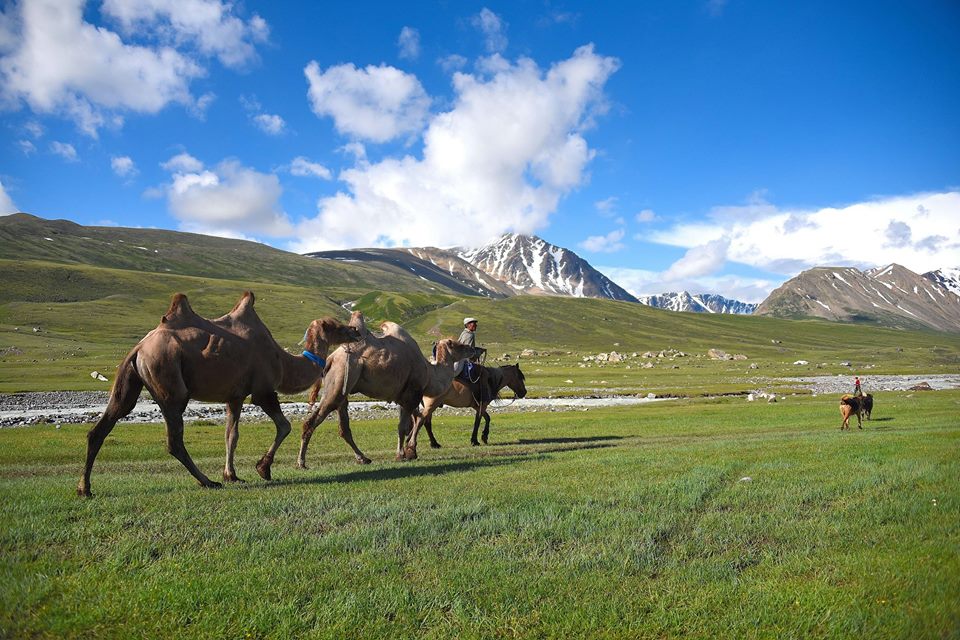
Start walking along open valleys and glacial river systems, with horses or camels carrying the main luggage where local conditions permit.
Enjoy the immense scale of the landscape and establish your first expedition camp. Keep the day moderate to help you adapt to the altitude.
Day 5 — Trek towards the Potanin Glacier
Continue towards the high mountain massif, where the landscape becomes increasingly rocky and alpine.
On clear days, the snowy summits create an extraordinary backdrop. Depending on the chosen camp and conditions, you may approach the glacier viewpoint or reach the established base-camp area.
Day 6 — Explore the glacier region
Spend a full day enjoying the glacier and surrounding peaks, with a shorter out-and-back hike or a rest day depending on your fitness and acclimatisation.
Photograph the ice, rocky moraines, and mountain panorama. Stay off crevassed glacier terrain unless accompanied by an appropriately qualified mountain guide with the required equipment.
Day 7 — A longer mountain walking day
Take a longer hike through the surrounding valleys or towards a suitable viewpoint, chosen according to the weather and the group’s ability.
This is a good opportunity to enjoy the feeling of remoteness that makes the Altai so special. Return to camp or move to a new campsite if your guide’s route plan allows.
Day 8 — Descend and experience nomadic life
Begin descending towards lower valleys and summer pastures.
Depending on the route and local arrangements, visit a Kazakh or Tuvan herding family, learn about their seasonal lifestyle, and share tea or a meal if invited.
Respect family privacy and always ask before taking photographs.
Day 9 — Continue towards lake country
If transport and your itinerary permit, continue to the Khoton–Khurgan lake region for a final scenic walking day.
Enjoy the contrast between the high glaciated massif and the gentler lakeside landscapes. This connection requires advance planning; it should not be assumed to be a short walk directly from the glacier camp.
Day 10 — Cultural discoveries and return journey
Visit accessible rock-art or archaeological sites if they fit your route, then begin the return drive towards Ölgii.
The Mongolian Altai contains important petroglyphic landscapes that reflect thousands of years of human activity. Your guide can help you understand their significance.
Day 11 — Discover Kazakh culture in Ölgii
Enjoy a more relaxed day in the provincial capital.
Depending on local arrangements, visit a Kazakh craft workshop, learn about traditional music, or arrange a respectful visit with an eagle-hunting family.
Golden eagle hunting is a living cultural tradition, but authentic hunting activity is seasonal and should not be promised during a summer trek.
Day 12 — Return to Ulaanbaatar
Fly back to the capital, subject to the domestic flight schedule.
If you have an international flight to catch, allow additional buffer time rather than relying on a same-day connection.
This itinerary is intentionally flexible. A more focused Potanin Glacier trek can devote extra days to walking in the high mountains, while a Khoton–Khurgan route would replace some of the glacier days with lake-country trekking.
4. When is the best time to trek in the Altai Mountains?
For most travellers, mid-July to mid-August is the best period for a high-mountain trekking holiday, although the wider trekking season generally extends from mid-June into early September.
Snow, river levels, and weather can vary considerably from year to year.
| Month | Conditions | Recommendation |
|---|---|---|
| June | Snowmelt, wildflowers, potentially difficult river crossings | Better for flexible, experienced trekkers |
| July | Generally favourable for high routes, lush valleys and long days | Excellent |
| August | Good trekking weather, alpine scenery and nomadic summer camps | Best overall choice |
| Early September | Cooler nights, quieter trails and beautiful autumn colours | Excellent with suitable cold-weather gear |
| Late September–October | Increasing cold and snow risk at altitude | Not ideal for a standard trekking holiday |
| November–April | Severe winter conditions in the high mountains | Specialist winter expeditions only |
July or August: which should you choose?
I would choose late July or the first half of August for a first Altai trekking expedition. This timing gives you a good opportunity to experience the high mountain scenery while nomadic families are using their summer pastures.
However, do not expect consistently warm weather. Snow can fall in summer, strong winds can develop quickly, and mountain nights can be close to or below freezing.
Your guide should be able to change the route or delay a crossing when conditions are unsafe.
5. What landscapes and experiences will you discover?
The Five Sacred Peaks
The Tavan Bogd massif is the dramatic centrepiece of the region. Its high summits form an impressive skyline above the surrounding valleys.
Khüiten Peak reaches approximately 4,374 metres and is Mongolia’s highest point. You do not need to climb it to enjoy the spectacular mountain scenery.
The Potanin Glacier
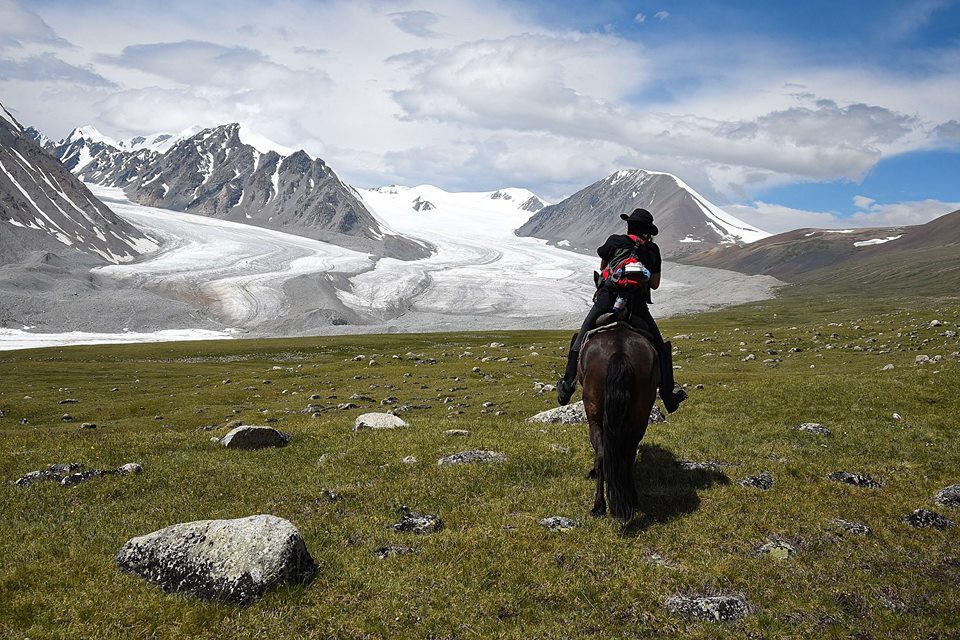
This major glacier is one of the region’s defining natural features. Trekking towards its lower reaches provides a sense of the scale and power of the Altai landscape.
Ice, moraine, snow-covered ridges and glacial streams make it a highlight for mountain photographers.
Khoton and Khurgan Lakes
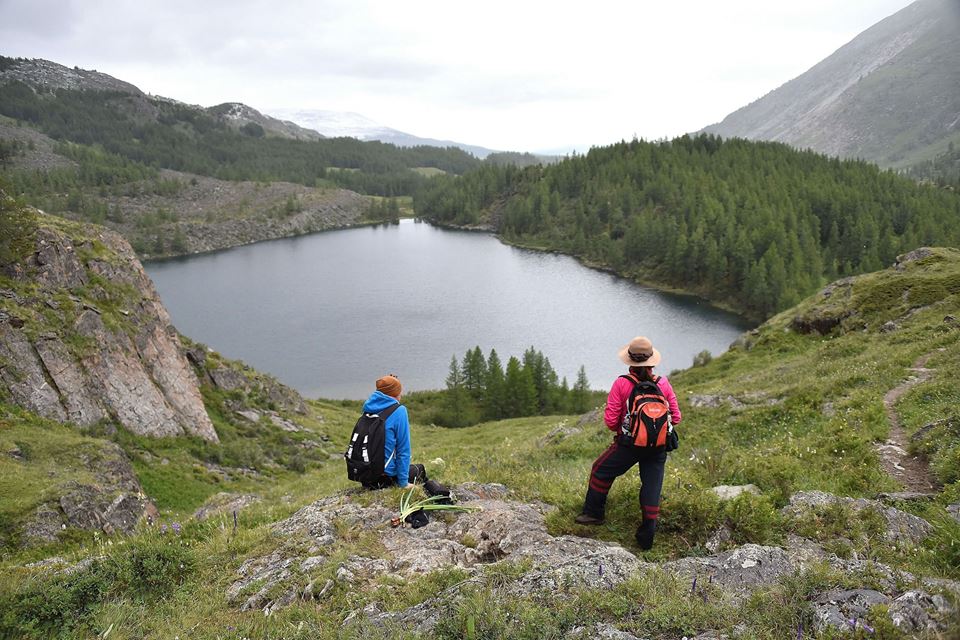
These beautiful lakes offer a different side of the Altai: expansive water, grassy shores, rolling mountain slopes, and summer grazing land.
They are particularly appealing for photographers and travellers who enjoy long-distance walking without concentrating exclusively on high-altitude terrain.
Wildlife and birdwatching
The wider region supports ibex, argali sheep, marmots, golden eagles and other mountain wildlife.
Snow leopards also inhabit parts of the Altai, although seeing one is rare. Bring binoculars and keep a respectful distance from animals.
Ancient rock art and archaeological sites
The Mongolian Altai’s petroglyphic complexes preserve an extraordinary record of human life extending back around 12,000 years.
Their carvings illustrate changing relationships between people, wildlife, herding and nomadic life. These archaeological sites add a remarkable cultural dimension to the trekking experience.
6. Experience Kazakh nomadic culture
A trekking holiday in the Altai is not only a journey through mountains. It is also an opportunity to encounter communities whose lives are closely connected to the landscape.
Bayan-Ölgii is home to a large Kazakh community, alongside other local communities, including Tuvan people. During summer, herding families may stay in traditional dwellings in mountain valleys and move their livestock between seasonal pastures.
What cultural experiences can you include?
- Visit a nomadic family: Learn about daily life, livestock herding, food preparation and seasonal migration.
- Share traditional hospitality: You may be offered milk tea, dairy products or local dishes. Accepting hospitality graciously is appreciated.
- Learn about Kazakh eagle hunting: Discover the relationship between hunters and golden eagles and the cultural significance of the tradition.
- Explore local crafts and music: Ask your guide about traditional embroidery, feltwork, musical instruments and local performances.
- Visit ancient rock-art sites: Explore selected archaeological areas with a knowledgeable local guide.
One important detail: the Golden Eagle Festival and traditional eagle-hunting season are not the same as summer trekking season. If you want to witness the major eagle festival, you may need to plan a separate autumn visit.
Summer visits with eagle-hunting families can still be rewarding, but the exact experience depends on the family and arrangements.
7. How difficult is trekking in the Altai?
The Altai is best suited to travellers who are comfortable with long days outdoors and basic camping. Even routes described as moderate can feel strenuous because of altitude, cold weather, uneven ground and remoteness.
| Trekking level | What to expect | Suitable for |
|---|---|---|
| Moderate | Steady walking, uneven trails, manageable daily distances | Regular walkers with reasonable fitness |
| Challenging | Longer days, steeper slopes, river crossings and higher camps | Fit hikers with multi-day trekking experience |
| Technical mountaineering | Glaciers, ropes, crampons, ice axes and potentially exposed terrain | Experienced mountaineers with specialist guides |
How fit should you be?
For a 6–8-day mountain trek, prepare to walk for several hours on consecutive days, sometimes over rough terrain with considerable elevation change.
A useful training plan for the 8–12 weeks before departure includes:
- Three aerobic sessions each week, such as brisk walking, cycling or hiking.
- One longer hike each week, gradually increasing duration.
- Hill training or stair climbing to prepare your legs for ascents and descents.
- Practice walks with your daypack and trekking boots.
- Rest days and recovery to avoid arriving exhausted.
You do not need to be an elite athlete for a non-technical glacier-base-camp trek, but you should be honest about your fitness and any experience at altitude.
Important: Reaching a glacier viewpoint or base camp is very different from crossing a glacier or summiting a peak. Do not attempt technical glacier terrain without the correct equipment, skills and qualified guide.
8. Accommodation, food and daily life on the trek
A multi-day Altai trek is an expedition rather than a conventional hotel-based holiday. Accommodation and facilities depend on the itinerary.
Accommodation
- Ulaanbaatar: A hotel at the beginning and end of the trip.
- Ölgii: A local hotel or guesthouse, providing an opportunity to shower, charge devices and restock supplies.
- Mountain camps: Expedition tents, sleeping mats and sleeping bags.
- Nomadic stays: An optional overnight visit may be possible with a local family, depending on arrangements.
Do not assume that mountain huts, restaurants, showers or reliable electricity will be available on the trail.
Food
Typical expedition meals may include porridge, bread, eggs, rice, noodles, meat, soups and hot drinks.
Fresh produce can become limited in remote areas, so tell your organiser about vegetarian, vegan, allergy-related or other dietary requirements well in advance.
A good trekking operator should provide sufficient food, safe drinking water arrangements, cooking equipment and a plan for carrying supplies.
A typical day on the trail
- 7:00–8:00 am — Breakfast and camp preparation: Eat breakfast, check the weather and pack your day bag while the team prepares the animals and main luggage.
- 9:00 am–12:30 pm — Morning trekking: Walk through valleys, along rivers or towards a mountain pass, with breaks for water and photographs.
- 12:30–1:30 pm — Lunch break: Enjoy a packed lunch or a hot meal if the support team can prepare one.
- 1:30–4:30 pm — Afternoon trekking: Continue towards the day’s destination. Walking times depend on distance, terrain, weather and the group.
- 5:00–9:00 pm — Camp, dinner and rest: Settle into camp, enjoy a hot dinner, check equipment and rest for the following day.
These are illustrative timings. High passes, river crossings, poor weather and acclimatisation days can change the schedule significantly.
9. Getting to the Mongolian Altai
The usual starting point is Ölgii, the provincial capital of Bayan-Ölgii in western Mongolia.
- Fly from Ulaanbaatar to Ölgii. Domestic flights operate according to the airline’s seasonal schedule, so confirm the dates before booking connecting international travel.
- Meet your local expedition team. Check equipment, food supplies, permits and the final route.
- Drive into the mountain region. Expect several hours in a 4WD vehicle on rough and sometimes unpaved roads.
- Start the trek. Depending on the route, you may continue on foot with horses or camels carrying luggage and camp supplies.
Allow a buffer day if possible. Flight delays, road conditions, fuel availability and mountain weather can disrupt travel plans.
10. Permits and local guides
Altai Tavan Bogd includes restricted border areas near Russia and China. The exact permissions depend on the route and access point.
Before confirming a trip, ask your organiser to verify:
- Whether a national park entry permit is required for the selected route.
- Whether a border-zone permit is required and who will arrange it.
- What passport information and lead time are needed.
- Whether your route has any access restrictions.
- Whether the guide, driver and support crew are included in the price.
For remote border-zone trekking, arranging the trip through an experienced local operator is the most practical approach.
Do not assume that a park ticket alone authorises access to every route. Permit procedures can change, so confirm them directly before departure.
11. What to pack for an Altai trekking holiday
The most important principle is to prepare for both sunny summer afternoons and freezing, windy mountain conditions.
Clothing
- Broken-in waterproof hiking boots.
- Lightweight hiking trousers and trekking shirts.
- Thermal base layers.
- Fleece or insulating mid-layer.
- Warm down or synthetic jacket.
- Waterproof and windproof shell jacket and trousers.
- Warm hat, gloves and spare socks.
Camping and walking
- Four-season-capable sleeping bag suitable for sub-zero nights.
- Sleeping mat with good insulation.
- Daypack with rain cover.
- Trekking poles.
- Headlamp and spare batteries.
- Water bottles or hydration system.
- Water filter or purification tablets.
Safety and personal items
- Sunglasses with strong UV protection.
- High-SPF sunscreen and lip protection.
- Personal first-aid kit and prescribed medicines.
- Blister care and basic foot-care supplies.
- Power bank and spare charging cables.
- Offline maps and a suitable navigation backup.
- Passport and required permit documents.
Ask your operator what camping equipment they supply before buying bulky items. For a supported trek, you may only need to carry your personal essentials and daypack while pack animals transport the heavier equipment.
12. Safety and responsible trekking
The Altai’s remoteness is part of its appeal, but it requires careful preparation.
- Altitude: Ascend gradually where possible and tell your guide immediately about headaches, nausea, dizziness or unusual fatigue. Confusion, difficulty walking straight or breathlessness at rest are emergencies requiring immediate descent and medical assistance.
- Weather: Carry warm and waterproof clothing even on clear mornings. Follow your guide’s decisions about high passes and exposed terrain.
- River crossings: Snowmelt and rain can make rivers dangerous. Never attempt a crossing simply because it appears manageable from the bank.
- Navigation and communications: Mobile coverage may be absent. Ask whether your expedition carries a satellite communicator, emergency beacon or satellite phone.
- Medical preparation: Obtain travel insurance that specifically covers trekking at your planned altitude, emergency evacuation and repatriation. Ordinary travel policies may exclude mountaineering or glacier travel.
- Environmental care: Carry rubbish out, use established campsites where possible, avoid disturbing wildlife and respect sacred places.
- Cultural respect: Ask permission before photographing people, homes or religious and cultural sites.
A responsible operator should have a clear emergency plan, a suitably experienced guide, reliable equipment and realistic turnaround criteria.
13. How much does a Mongolia Altai trekking holiday cost?
The price varies considerably with group size, itinerary length, the level of support and whether domestic flights and camping equipment are included.
Instead of relying on a headline tour price, request an itemised quotation covering the following:
| Expense | What to confirm |
|---|---|
| International flights | Usually booked separately |
| Domestic flights | Return Ulaanbaatar–Ölgii flights and baggage allowance |
| Ground transport | 4WD, driver, fuel and remote transfers |
| Trekking team | Guide, cook, horse or camel handlers |
| Accommodation | Hotels, guesthouses, tents and sleeping equipment |
| Meals | All trekking meals, snacks and drinking water |
| Permits | Park and applicable border-zone permissions |
| Insurance | Trekking cover and evacuation protection |
| Extras | Tips, personal gear, additional nights and contingency costs |
As a general rule, a private expedition costs more per person than joining a group because vehicle hire, guiding and support staff are shared across fewer travellers. A combination of the glacier region and lake country also usually costs more than a shorter single-area trek.
For a meaningful comparison, ask two or three operators to quote the same dates, group size, number of walking days and inclusions.
14. How to choose the right trekking operator
Look for an operator with demonstrable experience in western Mongolia rather than a company that primarily offers sightseeing tours elsewhere in the country.
Ask these questions before paying a deposit:
- How many actual trekking days are included, excluding driving?
- What are the expected daily walking distances, elevation gains and maximum sleeping altitude?
- Are pack animals, tents, sleeping mats, meals and a cook included?
- Who arranges the required permits?
- What happens if snow, flooding or weather prevents the planned route?
- What emergency communications and evacuation arrangements are available?
- How many travellers will be in the group?
- Is there a reserve day for delayed flights or bad weather?
- Are cultural visits arranged with local families by agreement?
- What is the cancellation and refund policy?
The best operator is not necessarily the cheapest. In a remote mountain environment, reliable logistics, local knowledge and good safety procedures can make the difference between an enjoyable expedition and a difficult one.
15. Frequently asked questions
Is Mongolia good for a trekking holiday?
Yes. Mongolia offers vast open landscapes, low-density tourism in many regions, and opportunities to combine wilderness walking with traditional nomadic culture. The Altai is especially appealing for travellers who want high mountains and glaciers rather than only steppe or desert scenery.
Can beginners trek in the Altai Mountains?
Beginners with good general fitness may manage a carefully chosen, moderate itinerary with a guide and adequate support. A long, strenuous glacier approach or a technical summit expedition is a different proposition and requires appropriate experience.
Can I trek to the Potanin Glacier without climbing a mountain?
Yes, a guided trek towards the glacier’s base-camp or viewpoint area is distinct from a technical climb. The precise route, distance and access conditions should be confirmed with your operator.
Is Khüiten Peak suitable for ordinary hikers?
Not as a straightforward hiking summit. At 4,374 metres, it involves high-altitude glacier mountaineering and technical equipment. A trek in the surrounding mountains can be spectacular without attempting the summit.
Is it possible to trek without horses?
Potentially, depending on your route, equipment and fitness. However, the logistics of carrying food, tents and supplies over several days can make a supported expedition more practical.
Ask the operator to distinguish between walking distance and the distance covered by support vehicles or animals.
How many days should I allow?
Allow at least 8–10 days for a trip with a shorter trek and travel time included. For a more rewarding experience, I recommend 10–12 days overall. A longer trip gives you more flexibility to explore both the glacier region and the lakes.
Will I have internet or phone reception?
Do not count on it in remote mountain areas. Download offline maps, tell someone your itinerary, and confirm emergency communication arrangements before leaving Ölgii.
Can I combine trekking with the Golden Eagle Festival?
Yes, but the festival is generally held in autumn, outside the prime summer trekking period. A combined trip may require a longer itinerary and a more flexible approach to weather and high-altitude access.
Final recommendation: the best Altai trekking holiday
If I were planning a first trekking holiday in Mongolia with the Altai Mountains as the main priority, I would choose the following:
- Destination: Altai Tavan Bogd National Park, Bayan-Ölgii Province.
- Best time: Late July to mid-August.
- Trip length: 10–12 days overall.
- Main trek: Six to eight days focused on the Potanin Glacier and surrounding mountain valleys.
- Travel style: Small guided group, camping, and pack animals for luggage where appropriate.
- Additional experiences: A visit with a Kazakh nomadic family, ancient rock art, and time in Ölgii.
- Essential planning: Arrange permits in advance and allow a buffer day for travel delays.
This combination delivers the defining experience of the Mongolian Altai: towering mountains, glacier-fed rivers, quiet wilderness, and a genuine connection with the people who inhabit this remarkable region.
The key is to avoid treating the Altai as a quick sightseeing stop. Give the mountains enough time, travel with a competent local team, and leave your itinerary flexible enough to respect the weather.